Body & Longevity
How to Lose Belly Fat, Get Lean & Toned, and Build Your Dream Body

The Never-Aging Era | Body & Longevity
Forget starving yourself. Forget hours of cardio. And forget the idea that getting older means accepting a body you no longer recognize.
At 40, after having two babies back-to-back, I’ve learned that creating your dream body requires an entirely different approach.
One that goes beyond calories and cardio.
We’re talking about muscle development, metabolic health, body composition, inflammation, hormones, cellular health, and recovery.
And yes, we’re talking about peptides.
Because the goal isn’t simply to weigh less.
The goal is to build a body that looks strong, lean, sculpted, feminine, and healthy — while feeling extraordinary in it.
Today, I’m sharing the approach I love, the five peptides on my radar, how I eat, how I train, and the additional beauty rituals that have become part of my Never-Aging Era.
First, my personal story.

After having my two boys just 15 months apart, my body went through an enormous transformation.
I was dealing with stubborn weight, puffiness, inflammation, hormonal fluctuations, and skin that looked dull and seemed to be aging faster than usual.
I didn’t feel like myself.
And what I eventually realized was that I needed to approach my body differently.
Not just focus on losing weight.
I wanted to support my metabolism, build and maintain muscle, feel stronger, improve my recovery, and take care of my skin as my body changed.
Discovering peptides genuinely changed the game for me.
They became an important part of my personal beauty and wellness routine, alongside the way I eat, train, sleep, and care for myself.
And perhaps the biggest lesson I’ve learned?
Your body deserves a personalized approach.
What works beautifully for one woman isn’t automatically what another woman needs.
The real secret behind that “model body” look


It’s not magic genetics. It’s not two hours of cardio. it’s not eating like a bird.
It’s supporting muscle tone. Improving metabolic efficiency. Managing inflammation. Optimizing recovery. Working with your biology instead of fighting it.
And most importantly, building the muscle that actually creates shape.
Think about the look so many women are after:
- A tighter, more defined waistline.
- Sculpted arms and shoulders.
- Strong, lifted glutes.
- Beautifully toned legs.
- A firm, athletic silhouette.
- Healthy skin that looks beautiful as body composition changes.
That appearance comes from a combination of muscle development, body-fat distribution, genetics, and consistent habits.
You don’t create visible definition simply by making the number on the scale smaller.
You need muscle underneath.
Training shapes the body. But your overall biology and recovery influence how well you respond to that training.
And this is where I love looking at the bigger picture.
My top five peptide picks for the body-composition conversation
Peptides are fascinating because different compounds interact with very different biological pathways.
Some relate to growth-hormone signaling. Others to appetite regulation, metabolism, or cellular energy.
They’re not interchangeable, and they don’t all have the same level of evidence behind them.
Here are the five I wanted to explore.


01. Tesamorelin
The deep abdominal fat conversation
Let’s talk about the belly.
Because abdominal fat isn’t all the same.
There’s subcutaneous fat, which sits beneath the skin, and visceral fat, which is stored deeper around the internal organs.
Tesamorelin is a growth-hormone-releasing peptide that has demonstrated reductions in visceral abdominal fat in a specific medical population.
That’s what makes its relationship with abdominal fat so interesting.
02. AOD-9604
The fat-metabolism peptide
AOD-9604 was developed from a fragment of human growth hormone and studied for its relationship with fat metabolism.
Unlike appetite-focused approaches, the concept behind AOD centers on fat-metabolism signaling.
It’s a fascinating area of peptide research and one that often comes up in discussions around body composition.
03. CJC-1295
The growth-hormone signaling peptide
Here’s where the discussion moves toward the physiology involved in building and maintaining a sculpted body.
CJC-1295 interacts with the body’s growth-hormone system and has been shown to increase growth hormone and IGF-1 levels.
Growth hormone has important roles in tissue growth, metabolism, and normal body function.
You’ll also see CJC-1295 discussed alongside Ipamorelin in peptide conversations.
04. MOTS-c
The cellular metabolism peptide
This one fascinates me because of its connection to mitochondrial biology.
Mitochondria are involved in producing the energy our cells use every day.
MOTS-c is a naturally occurring, mitochondria-derived peptide being studied for its role in metabolic regulation, insulin signaling, and the body’s response to exercise.
Why do I find that interesting?
Because metabolism is about so much more than how quickly you burn calories.
It’s also about how your cells use and respond to available energy.
And when we’re talking about creating a stronger body, supporting metabolic health through movement, proper nutrition, and sufficient recovery matters enormously.
05. Tirzepatide + Retatrutide (Reta)
Two of my favorite metabolic & body-composition peptides
These two deserve their own conversation because although they’re similar, they work differently.
And understanding that difference is what makes them so fascinating.
Tirzepatide
The dual-action approach
Tirzepatide works on two hormone receptors: GLP-1 and GIP.
Together, these pathways help regulate appetite, blood sugar, and how your body responds to food.
Why I love it:
- Helps reduce appetite and cravings.
- Promotes feeling satisfied with less food.
- Supports blood sugar regulation and insulin sensitivity.
- Produces significant reductions in body fat, including abdominal fat.
- Supports meaningful improvements in weight and metabolic health.
What I love about tirzepatide is its proven effectiveness for weight management. It’s an incredibly interesting option when excess body fat and appetite regulation are major concerns.
Retatrutide (Reta)
The triple-action approach
Now, this is where things get even more interesting.
Retatrutide targets THREE hormone receptors instead of two:
GLP-1 + GIP + Glucagon.
It works on the same two pathways as tirzepatide, but adds glucagon receptor activity.
Why does that matter?
Glucagon plays a role in how the body mobilizes and uses stored energy, adding another dimension to metabolic regulation.
Why I’m so fascinated by Reta:
- Targets three metabolic hormone pathways.
- Supports appetite and blood sugar regulation.
- Has demonstrated substantial reductions in body weight.
- Has shown improvements in important metabolic measures.
- Introduces an additional pathway involved in energy and fat metabolism.
Retatrutide has produced remarkable weight-loss results in studies, making it one of the most exciting developments in metabolic science.
So what’s the actual difference?
Tirzepatide: A dual-action approach with established results for appetite regulation, weight management, and improved metabolic health.
Retatrutide: A triple-action approach that adds glucagon receptor activity, with impressive emerging results for weight loss and metabolic health.
What I love about both is the focus on metabolic biology rather than simply relying on willpower and restrictive dieting.
And remember, losing fat and building a sculpted physique are two different things.
You still need to nourish your muscles, prioritize protein, lift weights, and give your body time to recover.
Because the ultimate goal isn’t just a smaller body.
It’s a leaner, stronger, beautifully sculpted body that you feel incredible in.
The part most women overlook: you have to build muscle

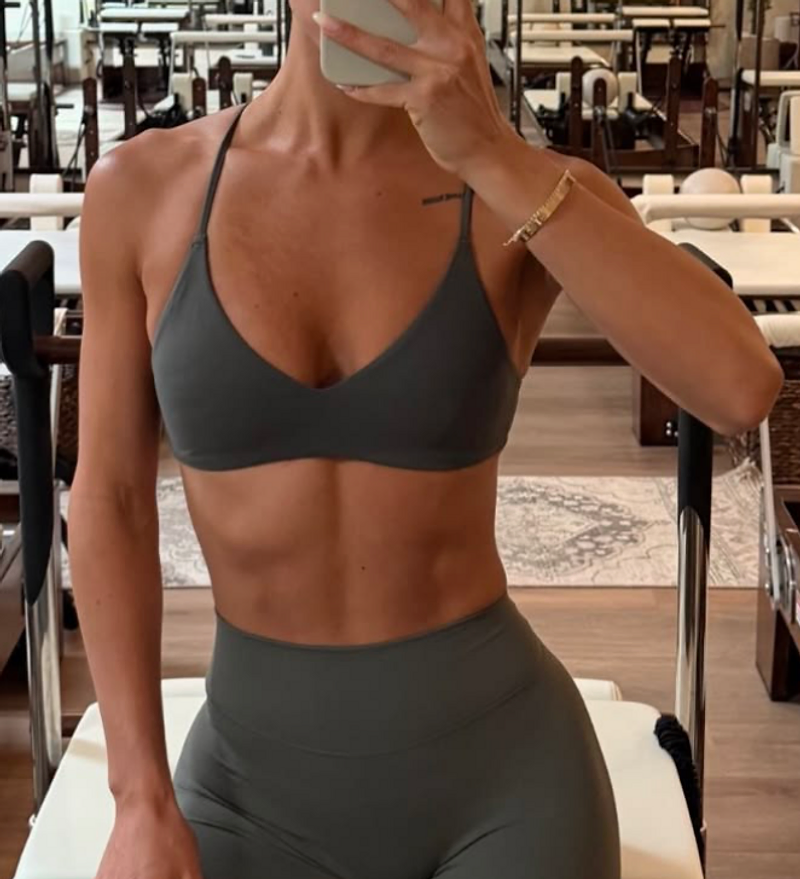
Let’s make one thing very clear.
Lifting weights is not going to automatically make you bulky.
If you want lifted glutes, beautifully defined arms, toned legs, and a stronger-looking midsection, building muscle is fundamental.
Muscle is what creates much of that sculpted appearance.
And maintaining muscle becomes especially valuable as we get older.
Resistance training helps improve strength, maintain lean tissue, support bone health, and improve physical function.
This is why I’m such a huge believer in weights.
What I personally use
I don’t believe you need an elaborate gym routine to start.
Depending on the exercise, I personally use:
- 5-pound dumbbells: lighter upper-body movements.
- 7-pound dumbbells: shoulder and arm work.
- 10-pound dumbbells: upper-body strength exercises.
- 15-pound dumbbells: movements where I want more resistance.
- 25–35 pounds: heavier squat and glute-focused exercises.
The exact weight isn’t the secret.
It’s choosing a weight that challenges the muscles you’re training while allowing you to maintain good form.
As you get stronger, you gradually increase the challenge.
That’s how muscles adapt.
My ideal sculpting routine
Three strength sessions per week is a beautiful starting structure.
Day 1
Lower Body & Glutes
- Squats
- Romanian deadlifts
- Glute bridges or hip thrusts
- Reverse lunges
Day 2
Upper Body & Core
- Dumbbell shoulder presses
- Dumbbell rows
- Biceps curls
- Triceps extensions
- Planks or dead bugs
Day 3
Full Body Sculpt
- Goblet squats
- Glute-focused lunges
- Dumbbell chest presses
- Rows
- Core stability exercises
For many beginners, two to three sets of approximately 8\u201312 controlled repetitions per exercise can be a practical starting point.
You can adjust the resistance, repetitions, and exercises as you progress.
Outside of those sessions, I love walking and simply keeping my body moving.
You don’t need to exhaust yourself to create results. You need consistency and progression.
And one more thing: endless abdominal exercises won’t selectively burn belly fat.
Core training can strengthen your midsection, but changes in abdominal fat come from changes in overall body composition.
Eat for the body you want to build

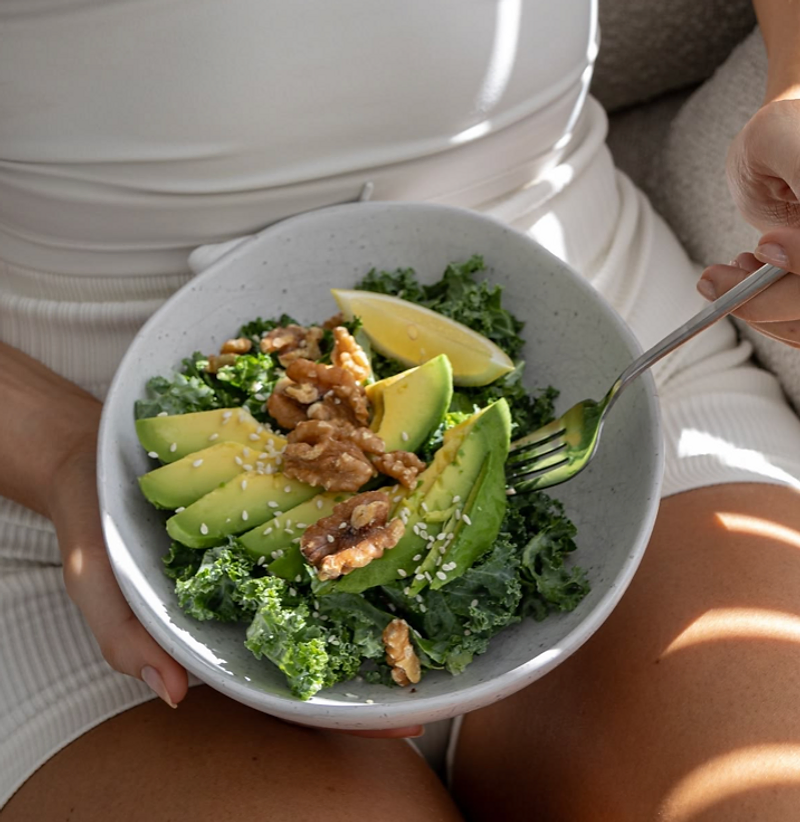
Let’s talk about food.
Because you can have the most sophisticated wellness routine in the world, but if you’re constantly undereating, missing your protein goals, or failing to nourish your body, you’re making things harder.
Personally, I prioritize real, whole foods.
I prefer organic ingredients, quality protein sources, beautiful fresh fruit, vegetables, and meals that leave me feeling satisfied.
I’m not interested in surviving on tiny salads and calling that wellness.
I want to nourish my body, build muscle, and actually enjoy what I’m eating.
How much protein do you really need?
Protein is essential for maintaining and building muscle.
For most healthy, physically active adults, a useful evidence-based range is:
1.4\u20132.0 grams of protein per kilogram of body weight daily.
Here’s what that can look like:
These are general exercise-nutrition ranges, not individual prescriptions.
I also like the idea of including a meaningful serving of protein at every main meal, rather than trying to get it all at dinner.
Approximately 20\u201340 grams per meal is a practical target for many active adults, depending on their overall needs.
If your goal is fat loss, remember that the amount you eat matters too. A sustainable energy deficit is generally necessary for fat loss, but aggressive restriction is not the answer when you’re also trying to maintain muscle.
What I actually love to eat
Breakfast \u2014 Simple, beautiful, nourishing
My ideal breakfast doesn’t need to be complicated.
- Two organic, pasture-raised eggs.
- Organic turkey bacon.
- Fresh avocado.
- A small piece of organic toast.
- Sea salt and fresh pepper.
- A drizzle of extra-virgin olive oil.
Simple. Delicious. Satisfying.
The eggs provide protein and essential nutrients, while avocado and olive oil provide unsaturated fats.
The toast adds carbohydrates for energy.
And if I want to increase the protein content, I can add extra egg whites or enjoy a side of high-protein Greek yogurt.
Two eggs alone provide only about 12\u201313 grams of protein, so the additions matter if you’re working toward a higher daily target.
Lunch \u2014 Fresh, colorful, protein-first
Lunch changes depending on my day.
Some days, I love a protein-rich smoothie.
My organic protein smoothie
- Organic protein powder.
- Organic banana.
- Organic berries.
- Unsweetened milk or a milk alternative.
- Optional spinach.
- Ice.
Choose a protein powder that provides around 20\u201330 grams of protein per serving if you’re using it as a main protein source.
You can also add yogurt for more protein and creaminess.
Other days, I’ll have a beautiful whole-food lunch:
- Organic grilled chicken or turkey.
- A generous portion of vegetables or greens.
- Avocado.
- Quinoa or brown rice.
- Olive oil and lemon dressing.
Real food. Quality ingredients. Nothing unnecessarily complicated.
Snacks \u2014 Yes, I eat a lot of fruit
I love fruit.
Watermelon, bananas, apples, berries \u2014 I genuinely eat a lot of it throughout the day.
Fruit provides carbohydrates for energy, fiber, vitamins, minerals, and water.
Some of my favorite snacks include:
- Cold, fresh watermelon.
- Organic apples or bananas.
- A bowl of beautiful berries.
- Organic sliced turkey.
- Greek yogurt with fresh fruit.
- A protein smoothie.
- A boiled egg with fresh fruit.
- Fruit with a handful of nuts.
A piece of fruit is a wonderful snack. On days when I need more protein, I pair it with a protein-rich option.
And I’m not afraid of carbohydrates.
Carbohydrates help fuel training, replenish muscle glycogen, and support an active lifestyle.
The goal isn’t to eliminate entire food groups.
It’s to eat in a way that supports your body and your goals.

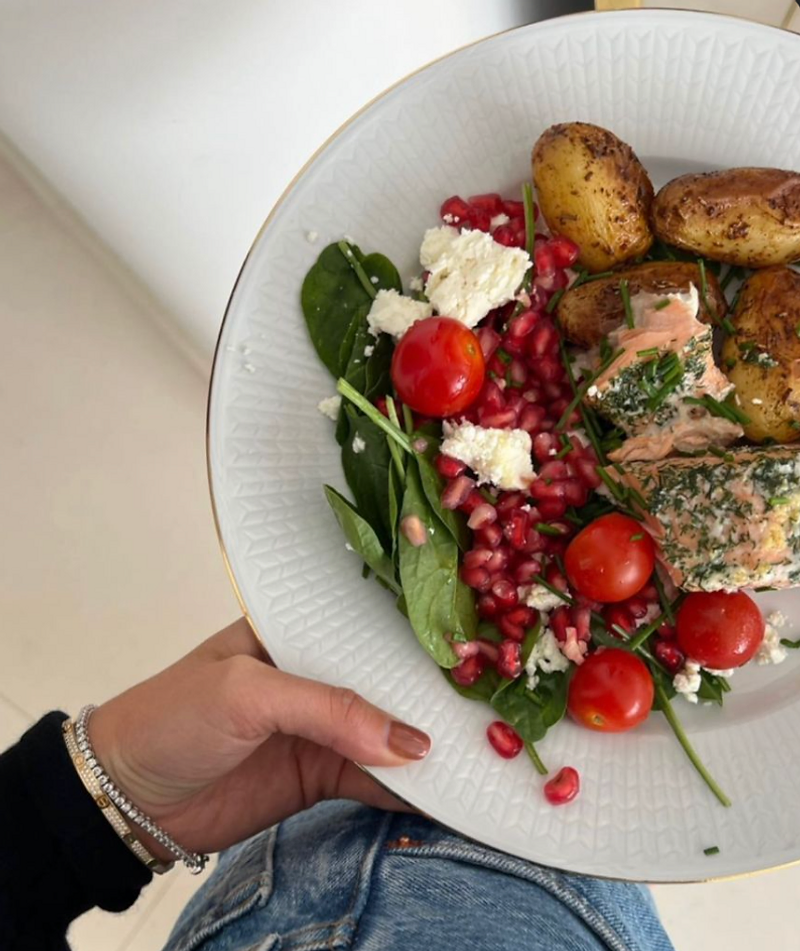
Dinner \u2014 Nourish your body beautifully
Dinner is usually built around a quality protein source, vegetables, and whatever else my body needs that day.
Some of my favorite options:
Option One \u2014 Wild-Caught Salmon
- Wild-caught salmon.
- Roasted asparagus, broccoli, or seasonal vegetables.
- Brown rice or roasted squash.
- Lemon, herbs, and extra-virgin olive oil.
Option Two \u2014 Organic Chicken
- Organic, free-range chicken.
- A colorful salad or roasted vegetables.
- Sweet potato or another satisfying carbohydrate source.
- Fresh avocado.
Option Three \u2014 Grass-Fed, Grass-Finished Beef
- Organic grass-fed, grass-finished beef.
- Roasted vegetables.
- Brown rice, potato, or squash.
- Fresh herbs and simple seasonings.
I like variety.
And I believe meals should be both beautiful and satisfying.
One of my biggest pieces of advice is to read your ingredient labels.
Don’t assume something is a great choice simply because the front of the package says healthy, natural, or high protein.
Know what you’re eating.
Hydration is part of your beauty routine
Another non-negotiable for me?
Hydration.
I love mineral water, fresh fruit, and foods that naturally contain a lot of water.
Watermelon is one of my absolute favorites.
Fruit can make a meaningful contribution to hydration while also providing beneficial nutrients.
But fruit complements drinking water \u2014 it doesn’t replace it.
My personal hydration habits are simple:
- Drink water consistently throughout the day.
- Enjoy plenty of fresh, water-rich fruit.
- Choose mineral water when I can.
- Drink more fluids when I’m sweating or exercising.
- Be mindful of my caffeine intake.
- Keep alcohol minimal or avoid it altogether.
If I enjoy coffee, I like to have water alongside it.
Coffee itself can contribute to daily fluid intake, but I still prioritize water throughout my day.
Beautiful skin, comfortable digestion, physical performance, and recovery all depend on adequate hydration.
And that’s something no expensive beauty ritual should overshadow.
Your dream body is built during recovery, too


This is one of my favorite conversations because women so often underestimate it.
Your body needs recovery to adapt to your training.
You don’t need to train harder every single day.
You need to give your muscles a reason to grow and then allow them time to recover.
That means:
- Taking rest days when needed.
- Alternating harder training sessions with lighter movement.
- Eating enough protein and overall food.
- Prioritizing consistent sleep.
- Managing daily stress.
The beauty sleep connection
I call it Beauty Sleep for a reason.
Sleep is involved in hormone regulation, physical recovery, cognitive function, and metabolic health.
Most adults need approximately 7\u20139 hours of sleep nightly.
When sleep becomes consistently inadequate, appetite regulation, training performance, and recovery can all be affected.
For me, creating a beautiful nighttime ritual is a form of self-investment.
A cool, comfortable bedroom.
A consistent sleep routine.
My favorite sleep accessories.
And treating rest as an essential part of my wellness practice rather than something I squeeze in after everything else.
You cannot expect your body to perform at its best if you never give it the opportunity to recover.
The beauty-longevity trio I love after 40

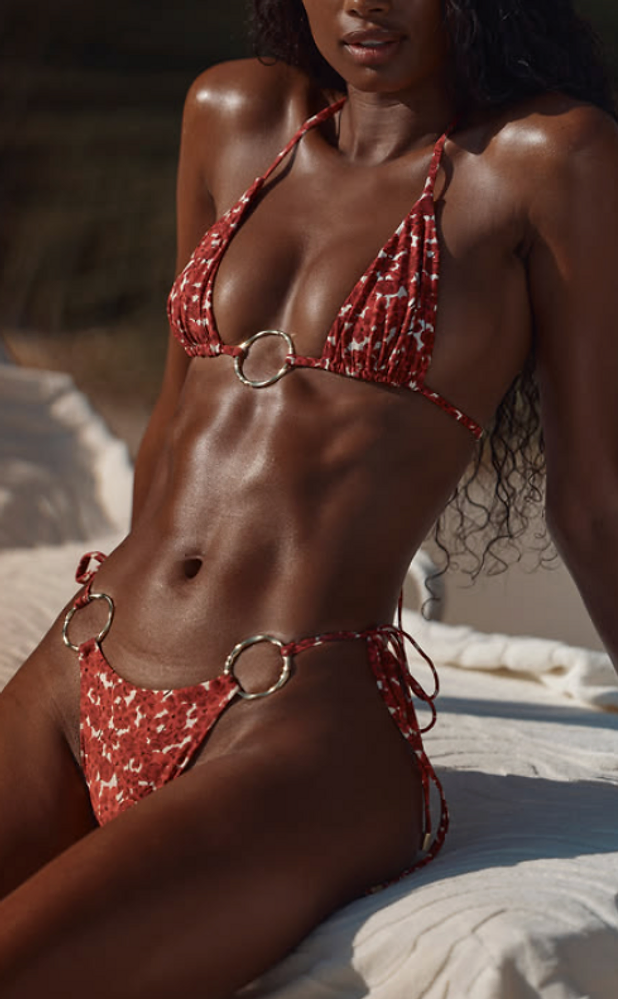
Now, let’s talk about something women don’t discuss enough during body transformations.
What happens to your skin while your body is changing?
When you lose a significant amount of weight, you may also notice changes in facial fullness or the appearance of skin firmness.
Age, genetics, the speed and amount of weight loss, skin elasticity, and overall nutrition can all play a role.
This is why I don’t think about body composition separately from beauty and skin health.
And there are three ingredients in particular that I find fascinating.
01. GHK-Cu \u2014 The copper peptide
My skin-quality favorite
Copper peptides have become one of my favorite areas of beauty science.
GHK-Cu is a copper-binding peptide studied for its involvement in skin-repair processes and the biology of collagen and elastin.
Why do I love that?
Because skin quality matters.
I want skin that looks smooth, radiant, and beautifully cared for, whether I’m maintaining my weight or changing my body composition.
Topical copper peptides are particularly interesting in skincare routines focused on the appearance of firmness, texture, and signs of aging.
For me, the appeal is caring for the skin itself rather than thinking only about the number on the scale.
02. NAD+ \u2014 The cellular energy essential
My longevity obsession
NAD+ is a coenzyme naturally present in our cells.
It plays a fundamental role in cellular energy metabolism and many biological processes, including pathways involved in cellular maintenance.
Which is why it’s such a major topic in longevity science.
I’m fascinated by the idea of supporting cellular health as we age.
Because my Never-Aging philosophy isn’t only about looking younger.
It’s about feeling capable, strong, energized, and vibrant throughout life.
NAD+ biology is an important part of understanding cellular health and aging, even though increasing NAD+ levels isn’t the same as proving that a treatment reverses aging.
It’s one of the most interesting areas of longevity research to me.
03. Glutathione \u2014 The master antioxidant
My radiance favorite
Glutathione is a naturally occurring antioxidant made from three amino acids.
It plays an important role in the body’s antioxidant defenses and helps protect cells against oxidative stress.
Oxidative stress is involved in many processes associated with cellular damage and aging.
That’s why glutathione has become such a popular ingredient in beauty and wellness conversations.
What interests me most is the relationship between antioxidant function and overall cellular health.
And because I care about radiant skin just as much as a sculpted body, it’s one of the ingredients I personally love learning about and incorporating into my broader wellness philosophy.
Why I think about all three together
GHK-Cu, NAD+, and glutathione are different molecules with different biological functions.
They’re not interchangeable, and using them together hasn’t been shown to prevent loose skin or guarantee a younger appearance during weight loss.
But they each represent an area of beauty or longevity science I find incredibly interesting:
Skin biology. Cellular energy. Antioxidant protection.
For me, beauty after 40 means looking at the entire picture \u2014 not just fat loss.
Why I believe personalization changes everything
Here’s the biggest lesson I can share from my own experience.
Stop copying someone else’s wellness routine and expecting their results.
Your body isn’t identical to mine.
Your hormones, health history, goals, lifestyle, recovery needs, and body composition can all be different.
And when it comes to advanced wellness treatments, that individuality matters even more.
It’s precisely why I chose a personalized concierge provider.
What I love about Luxury Medical Group is the individualized approach and ongoing support.
You’re not simply handed a generic plan and left to figure everything out yourself.
There’s an opportunity to discuss your goals, review your options, and have a provider guide the decisions and follow-up along the way.
For me, that experience has made an enormous difference.
Because whether your goal is weight management, building a stronger body, supporting recovery, or exploring advanced wellness options, the best place to begin is with a plan designed around you.
Your dream body is not built by doing less for yourself.
It’s built by investing in the things that matter.
- Building and maintaining muscle.
- Eating enough protein.
- Choosing nourishing, whole foods.
- Moving your body consistently.
- Prioritizing hydration.
- Respecting your recovery.
- Protecting your beauty sleep.
- And becoming more intentional about how you care for yourself.
Advanced wellness and peptide science can be part of a personalized conversation, but they don’t replace those foundations.
You don’t need to punish your body to change it.
You need to learn how to support it.
Because the goal was never just to lose weight.
The goal is to create a body you feel extraordinary living in.
Welcome to your Never-Aging Era.
SUNSHINE & VANITY
The Never-Aging Era\u2122\ufe0f