The Dream Hair Edit
Your hair isn't aging. It's under-signaled.
What's really behind thinning, shedding and hair that refuses to grow, and the rituals I use to wake it back up.
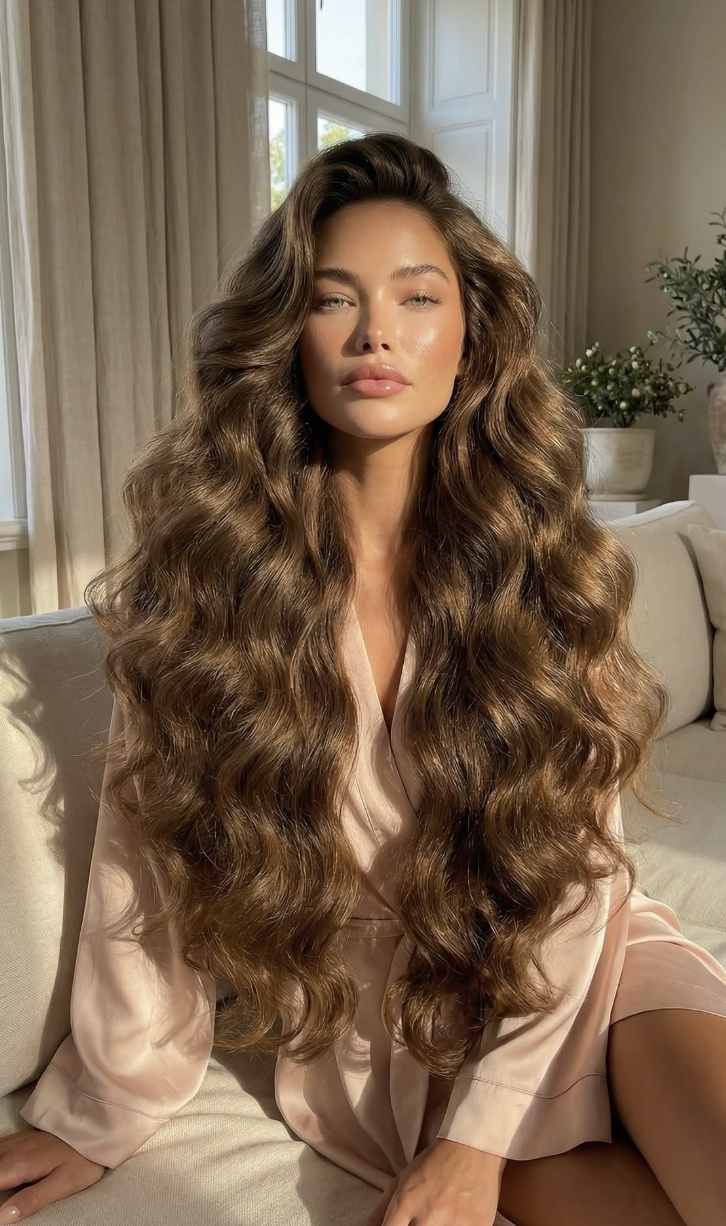
Somewhere along the way, women were told that thinner, duller, slower hair is simply what happens after 35.
Part of getting older. Something to hide with a clip-in, a good blowout and a strategic part.
I don't buy it.
Your hair is one of the first places your body tells the truth. It reacts to your iron, your sleep, your hormones, your stress and the environment on your scalp long before any of it shows up on your face. Which also makes it one of the most responsive things you can change.
The problem isn't that your hair is "getting old." The problem is that most women are treating the wrong thing. Another mask for a follicle problem. Another oil for a signaling problem. Another shampoo for a scalp that's been quietly inflamed for years.
This edit is everything I wish someone had handed me. What your hair is actually telling you, why follicles shrink, and the exact tools I use to bring density, length and shine back.
Hair care treats the strand. Hair biohacking supports the root.
My hair story
I didn't write this from a lab. I wrote it from my bathroom mirror.
June 18, 2026
I sat in a salon chair to go from dark to light. I walked out with hair that was badly bleached, burnt and breaking off. It took two more appointments just to make it look okay again, and in the end the only real fix was the scissors. Shoulder length. Years of growth, gone in one summer.
And it wasn't my first round. Before that, I'd been through postpartum shedding and thinning. The wider part. The hair in the drain. The ponytail that kept getting smaller. All of it.
So I did exactly what I'm about to tell you to do. No more color. No more cuts. No magic salon treatment. Just this system, these exact products, every single week.
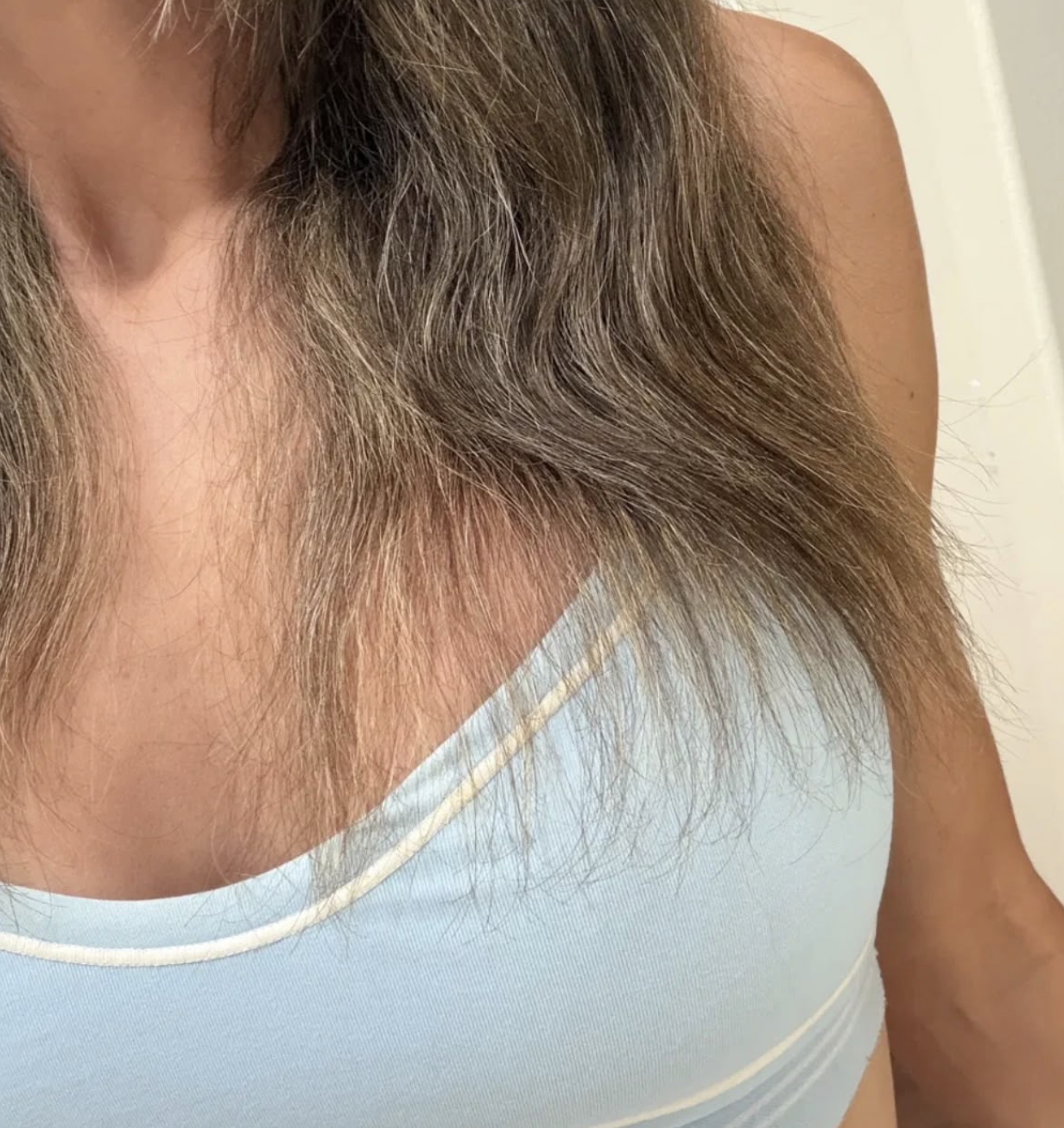
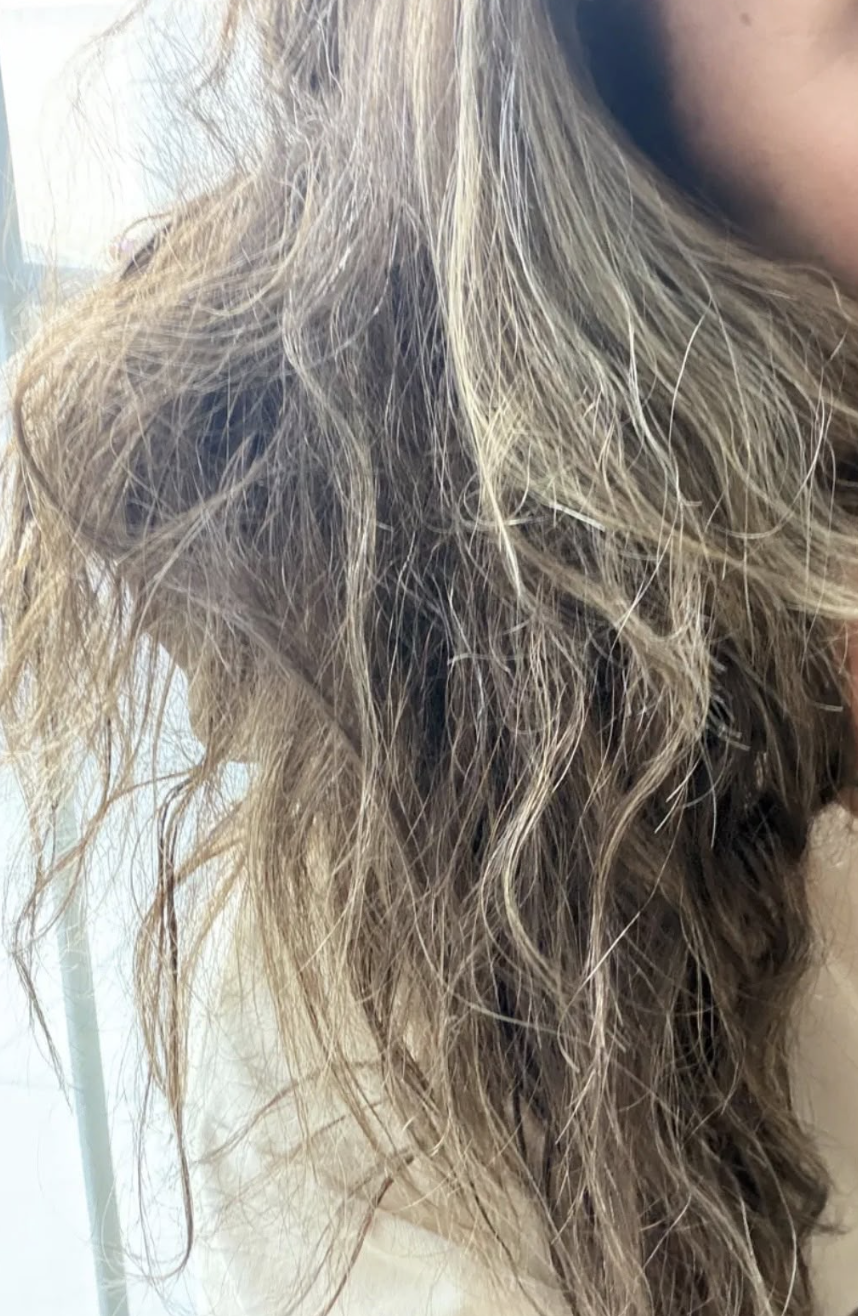
October 2026
I haven't touched it. No color, no trims, no extensions. My hairline is fuller, my lengths are past my shoulders again, and it's growing faster than I have ever seen it grow.


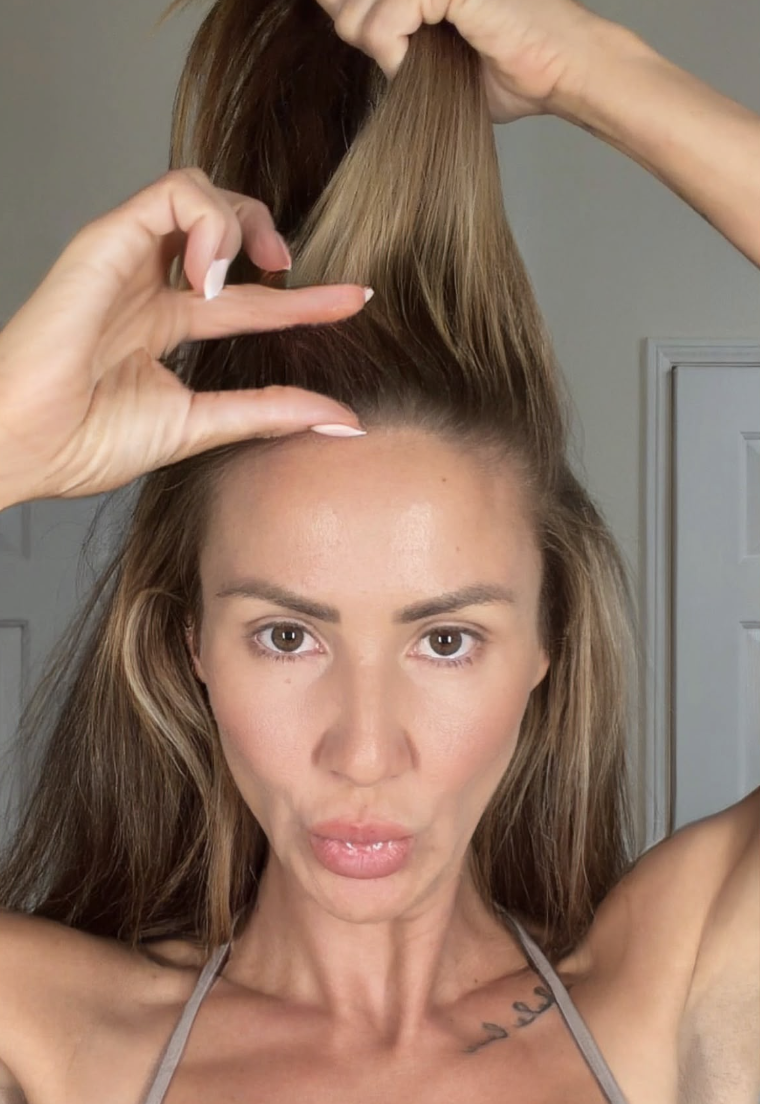
Same woman. Different strategy. Everything below is what I actually did, and why it works.
First, the part no one explains: your follicle is alive
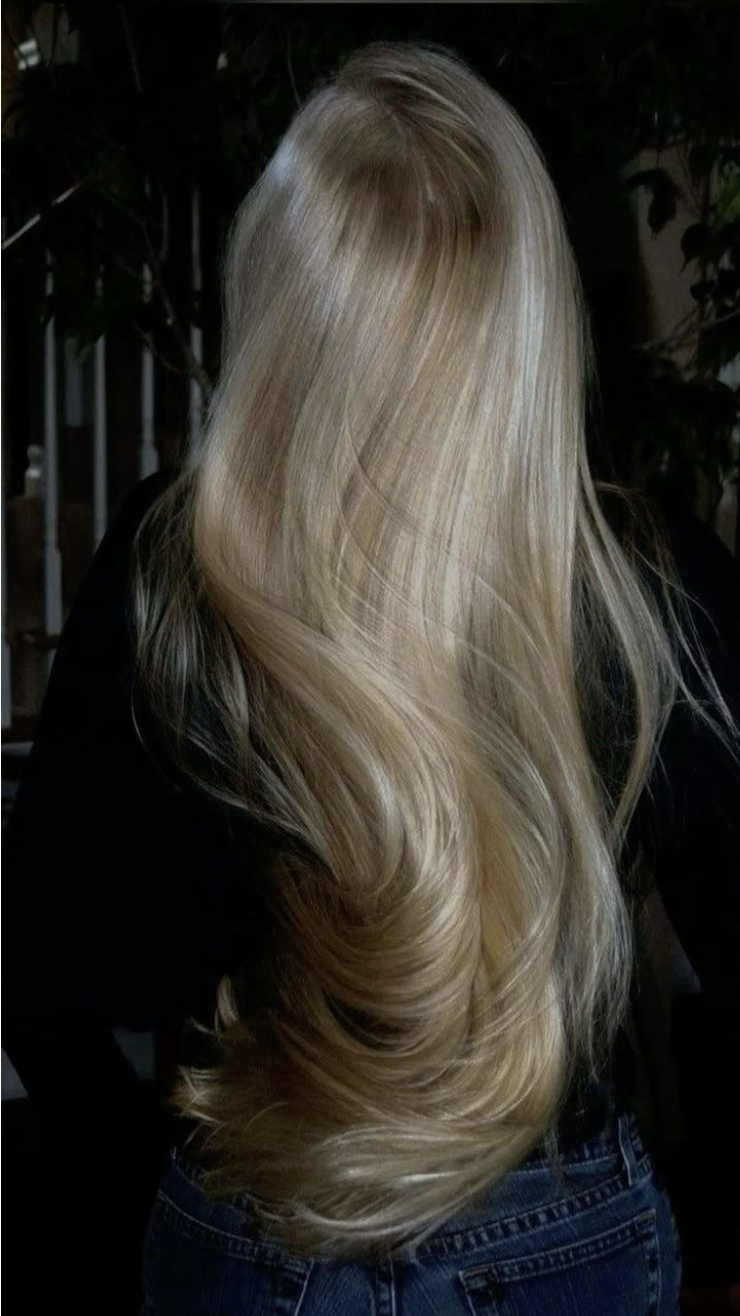
Every strand grows from a follicle, a tiny organ under your scalp with its own blood supply, its own energy needs and its own schedule. Each one moves through three phases, over and over, for life.
- GrowthLasts for years. This is where all your length comes from.
- TransitionA few weeks where the follicle winds down.
- Rest and releaseA few months of rest, then the strand sheds and a new one begins.
At any moment, roughly 85 to 90 percent of your hair should be in its growth phase. When stress, hormones, inflammation or low nutrients push more follicles into rest at once, you shed.
And when follicles receive fewer growth signals over years, something quieter happens. Each new strand comes back a little thinner, a little shorter, a little finer. This is called follicle miniaturization, and it's the reason so many women never see handfuls of hair fall out. Just a widening part, softer temples and a ponytail that keeps shrinking.
Here's what changes everything: a miniaturizing follicle usually hasn't died. It's under-fed, under-energized and under-signaled. And signals are something we can work with.
Your hair issue has a name
Shedding, breakage, thinning, grays, slow growth and scalp inflammation can look almost identical in the mirror. They are not the same problem, and the pattern changes the protocol. Find yours.
Shedding
- You notice
- More hair in the shower, the brush, the pillow. All over, not one spot.
- It's telling you
- Something pushed a wave of follicles into rest, often two to three months ago. Stress, illness, a crash diet, a hormone shift, low iron.
- Focus on
- Ferritin, protein, sleep and stress first. The good news: resting follicles are not gone follicles.
Breakage
- You notice
- Short snapped pieces around your face and crown. Ends that feel like straw.
- It's telling you
- This is a strand problem, not a root problem. Heat, bleach, friction and tight styles are winning.
- Focus on
- Repair and protection: oils, less heat, silk, protein.
Thinning and miniaturization
- You notice
- A wider part, a see-through crown, a finer texture than you used to have.
- It's telling you
- Your follicles are getting weaker growth signals. Often hormone-sensitive, and it tends to show up after 35 as estrogen shifts.
- Focus on
- Signal and stimulate: derma stamping, copper peptides, stem cell support, red light.
Temple and hairline thinning
- You notice
- Softer temples, wispier edges, a hairline that looks less defined.
- It's telling you
- Hormones, scalp health and tension from years of tight ponytails and clips.
- Focus on
- Targeted stamping and serum right where it's needed, and looser styles.
Hair that won't grow past a certain length
- You notice
- It's been the same length for two years.
- It's telling you
- It probably is growing. It's breaking just as fast, or your growth phase has gotten shorter.
- Focus on
- Retention, not just growth. Protect the lengths and feed the root.
Premature grays
- You notice
- Silver strands earlier than you expected.
- It's telling you
- Your pigment cells are under oxidative stress. Copper matters here: it's required by the very enzyme that makes melanin.
- Focus on
- Copper, B12, antioxidants and stress.
Scalp inflammation
- You notice
- Itch, flakes, tenderness, an oily or tight scalp.
- It's telling you
- The soil is irritated. Inflammation around the follicle interrupts growth no matter what you put on your lengths.
- Focus on
- Calm and repair the scalp before you stimulate it.
The Dream Hair Longevity Stack
Dream hair is not one miracle product. It's a sequence. Skip a step and the rest works half as hard.
- Restore. Look at what's underneath: iron, protein, thyroid, hormonal shifts, stress and sleep.
- Repair. Calm irritation, clear buildup and support the scalp barrier.
- Signal. Give follicles new instructions with copper peptides, peptide complexes and stem cell support.
- Stimulate. Layer in precision derma stamping and red light therapy.
- Protect. Reduce heat, bleach damage, friction and breakage so the growth actually stays.
Now let's get into the tools, and the science of why each one works.
Why I derma stamp instead of derma roll
Microneedling creates tiny, controlled micro-channels in the scalp. Your body answers the way it answers any small injury: with a repair response. Fresh blood flow. A rush of growth factors. And activation of the Wnt pathway, one of the key signaling pathways tied to follicle stem cells waking up and starting a new growth cycle.
It's been studied for hair regrowth for over a decade. In one widely cited study, people who added microneedling to their topical routine saw dramatically more regrowth than those using the topical alone. The needling didn't just stimulate the follicle. It opened the door for everything applied after it.
So why do I stamp instead of roll? Because on the scalp, the tool matters.
The roller
Needles enter and exit at an angle as the barrel turns, which can drag rather than puncture cleanly. It rolls straight through your hair, catching, tugging and tangling. Hard to aim. Hard to clean.
The stamp
Straight down, straight up. Clean vertical channels at a consistent depth. No rolling over strands. You place it exactly where you need it: along your part, at the temples, across the crown.
My rule: stamp on a clean, sanitized scalp, light pressure, once or twice a week, and never over irritated skin. Then apply your peptide serum right after, while those channels are open. That window is where the magic is.
The precision tool I use on my part line and temples.
GHK-Cu: why copper is the peptide I'll always talk about

GHK-Cu is a tiny peptide your body already makes: three amino acids bound to copper. It was discovered in human plasma in the 1970s, and here's the part that stopped me in my tracks. At 20, you have plenty of it. By 60, levels have dropped by more than half.
Not coincidentally, that's the same window where skin thins, healing slows and hair density softens.
Copper peptides have been studied for their ability to:
- Support larger, stronger folliclesResearch has looked at its role in increasing follicle size.
- Talk to the dermal papillaThe follicle's command center, the cells that tell hair when and how to grow.
- Build the environment around the rootCollagen, and new tiny blood vessels that deliver nutrients to the follicle.
- Calm and protectAntioxidant and soothing activity on a stressed, inflamed scalp.
And remember those early grays? Copper is required by the enzyme that produces melanin, your natural pigment. Which is why copper keeps showing up every time we talk about hair that looks and acts younger.
Oils feed the strand. Copper peptides speak to the root.
Why I love the Aurabiom topical
One peptide sends one message. A multi-peptide serum sends a whole conversation. Aurabiom pairs the copper peptide I just told you about with complementary peptides, so your follicles get repair, renewal and growth signals all at once, delivered right where they need to go.
It's lightweight, made for the scalp, and doesn't weigh down your roots. I apply it to my part and temples after stamping, and on the days in between. It's the step I never skip.
The multi-peptide copper serum I use on my scalp.
Stem cells and peptides: giving the follicle new instructions
Every follicle has its own reservoir of stem cells, tucked into a small region called the bulge. They're what rebuild the follicle at the start of each new growth cycle. With age, stress and inflammation, they go quiet. The follicle is still there. The instructions just stopped coming.
Peptide and stem cell treatments are designed to restart that conversation. Biomimetic peptides are sequences built to mimic your body's own growth messengers. Plant stem cell extracts are rich in protective compounds studied for helping follicle cells resist the stress that ages them.
Together, they do what no conditioner ever could: work on the part of you that actually makes hair. This is not your grandmother's hair tonic.
The peptide and stem cell treatment I use for growth.
Red light: energy for the follicle
Growing hair is one of the most energy-hungry jobs in your body. Follicle cells divide fast, and fast needs fuel. That fuel is made inside your mitochondria.
Red and near-infrared light are absorbed by an enzyme inside the mitochondria, helping cells produce more of their energy currency. More energy, better circulation, and more follicles staying in their growth phase longer.
This isn't woo. Low-level light devices are FDA-cleared for hair loss, and the research behind them is real. The secret is the boring part: consistency. A few sessions a week, every week.
The red light device I use for growth.
When the problem is the strand: repair

Not every hair issue lives at the root. If your hair snaps, frizzes, looks dull or never gets past your shoulders, your lengths need protection as much as your follicles need signals. Growth only counts if it stays.
When my hair was burnt, this is where I started. Bur Bur Oil seals the cuticle, cuts friction and brings back the glassy shine that heat and color strip away. Paired with its system, it's how I protect the length I'm working so hard to grow, and nourish the scalp along the way.
The oil and system I use for damage, breakage and growth.
Copper from the inside
Everything above works on the scalp. Some women also choose to support copper peptides from the inside, for hair, skin and the way they age overall.
This one isn't DIY. It's personalized and guided by a medical provider, which is exactly why I work with Luxury Medical Group. If you want to know whether it's right for you, book a consult through my link and they'll walk you through it.
Internal copper peptide support, by consult only.
The Mermaid Hair Ritual
Here's how it all comes together in my week.
Stamp night, once or twice a week
- Cleanse. Start with a clean, dry scalp and a sanitized stamp.
- Stamp. Light pressure along the part, temples and crown.
- Signal. Peptide serum right away, while the channels are open.
- Energize. Finish with red light.
Most days
Serum on the part and temples. Red light a few times a week, following your device.
Once a week
Oil through the lengths and a slow scalp massage. Silk on your pillow every night.
Always
Protein and iron-rich foods, less heat, looser styles, real sleep.
Give it 90 days. Hair grows about half an inch a month, and follicles shift phases slowly. Take a photo today in the same light, same part, same angle. You'll want it later.
Your hair was always meant to be your crown. Treat it like one.
Most women will read this, save it, and go buy another hair mask. That's fine. This was written for the ones who won't.
If you're done accepting "it's just your age" as an answer, start with one step this week. Your follicles are waiting for the signal.
xo, Karmel
Some links on this page are affiliate links, which means I may earn a commission at no extra cost to you. I only share what I personally use and love. This is my personal experience and education, not medical advice.